Saturday, 30 November 2013

Thriller Opening Deconstruction Investigation

    This week we have been looking at the opening scenes/titles of Thriller films in the media. For this post, I am going to embed the class' deconstruction example of 'Sixth Sense' and then watch 2 minutes of a real Thriller film, print screening each cut and analysing what we see and when we see it:

Sixth Sense Class Exmple:


My Deconstruction: Van Helsing

Beginning Ident:
1) 00:00:00 - 00:00:08
1) 00:00:08 - 00:00:15
1) The transition between the coloured UNIVERSAL ident to the black and white ident almost at once describes to the reader that they are going back in time. The fact that have included the ident into the film and added the soundtrack over the top seems to make an impression; it instantly gets you interested as to why the picture has gone grey-scale.

2) 00:00:15 - 00:00:18

Film begins:

2) 00:00:18 - 00:00:22
2) At 00:00:15, the UNIVERSAL ident gets engulfed completely in flames. It demonstrates the destruction thats about to happen in the film - before anybody has even watched it. Afterwards, at 00:00:18, the flaming planet transforms into the film through a transition - becoming an actual flaming torch which belongs to what                                                            appears to be the mob leader.

3) 00:00:22 - 00:00:25
3) In cut 3, it displays a crane shot being used to show the audience how many people there are in the mob. To anybody, a mob that size cannot be any good - so with that in mind, it makes the audience start to get a little jumpy about why the mob has formed and who they are hunting.

4) 00:00:25 - 00:00:27
4) This shot demonstrates a mid shot cut from the waist upwards of the peasant guy's body. He appears to be dressed in very dark clothes - probably black or shades of brown - displaying that he hasn't actually got much money. Shortly after this cut, it goes on to watch the same mob guy running off screen, roaring, as he rampages forwards to his destination

5) 00:00:27 - 00:00:46

5) 00:00:35 - 00:00:40 of same clip
5) Cut 5 is back to the tree trunk again, being bashed into the courtyard gates of a castle gate. This happens at the point 00:00:34 into the film. The whole effect of this opening at the moment is building the suspense, tension and arousing questions like "why are the mob angry?" or "Who are they angry at?". 
At the point when the doors are swung open the camera cuts to, what appears to be, a Point Of View shot from one of the mob participants. As this happens, small details pop up to give away a little of the opening plot = Transylvania 1887. The date would explain why the editing is in black and white low key lightning and the place name - well, that alone brings up many a thought - one popular one being that is home to 1 of the most well know monsters of all time = Count Dracula. In other novels, Frankenstein was also believed to have come from Transylvania also.
Scene change to inside castle:

6) 00:00:46 - 00:00:47
6) The first thing you see what the scene switches to the interior of the castle is an extreme close up of somebody's eyes. Now for starters, that's rather creepy. For seconds it's also significant in the way it doesn't uncover to much of the person's identity. All the audience knows so far is that he has normal, human eyes and his face is covered in bandages. 
Of course; having seen the place name - some people will begin to make slow connections - causing the thriller genre to work it's magic with the fact it begins to draw people in; getting them asking questions and wanting to find answers. 
7) 00:00:47 - 00:00:48
7) This 1 second clip shows a hand, to whom we must assume belongs to the person whose eyes we just saw. The hand appears to be strapped down to some kind of table or surface which is made apparent by its constant straining to get free. Again, this links in with thriller because it makes the audience think "Well who is that?" "Why's he strapped down?" etc.
The look of the hand itself has a character of its own. Even in black and white you can tell the skin has a strange tint to it - old and wrinkled with black finger nails... something that we would associate today with that of the walking dead.
8) 00:00:48 - 00:00:50
8) Okay, so this cut kind kind of make you jump if your really into the film. The camera cuts to an extreme close up of the man's mouth as he suddenly breaks into an enraged roar. The audience can get a feel from just these main clips about this person - most probably resulting in the fact he isn't normal.
The roar brings out the true pain and anger the creature is feeling... it almost makes the audience feel sorry towards him,

9) 00:00:50 - 00:00:57
9) After the 8th cut, we get introduced to another character - though once again information is with held; such as the man's identity, what he's doing or what he's done to make the mob angry. However certain info is available for us to analysis as an audience. This are things like his lab coat for example. The conventions of a lab coat is instantly scientist, professor, doctor etc. Anything basically that works in a lab or with dangerous medication and stuff. So at the moment all we know is he's a scientist of some sort.
Next is the environment he is in. Almost straight away you can tell its the stereotypical 19th century lab; the old fashioned, ahead of it's time equipment, stone walls, often in the basement of a castle and almost every time you see one - there's a body strapped to a table. Well, does this scene tick those boxes? Yes. This adds to the thriller genre because it looks spooky - you half expect the scientist guy to be a villain.  
At some point in this cut the scientist crys out "It's alive" three times. This instantly answers and arouses questions once again = answering what he is doing (giving life to a creature) but then arousing the questions of "why?" "How?" Of course, if you've watched or know anything about Frankenstein - this will be beginning to sound bells in your head.

10) 00:00:57 - 00:01:02
10) Okay, so that Frankenstein creature has been brought to life in the last cut, but now the unknown scientist has heard the sound of the approaching mob. In this cut a reaction shot is used to allow the audience the ability to see the character's expression on his face - which in this case is panic & shock. I mean, who wouldn't be with over 100 angry villagers charging your castle!

Scene change to exterior:

11) 00:01:02 - 00:01:04
11) I'm not sure what the shot is meant to be here - BUT it's certainly over head and it appears to be a POV shot - after quickly glancing at later images from the castle - because the scientist's window is directly behind where the camera is. This is basically allowing the reader to see what has scared the scientist so much - which as we knew before him (Dramatic Irony), the mob are on their second gate. Getting much closer - which then increases the tension and suspense of the opening.

12) 00:01:04 - 00:01:06
12) Again, another shot of a peasant mob participant smashing the big tree trunk into the gate. The shot is a mid shot of the villagers however, if you look at it in a technical way - you almost argue that it's coming from the gate's Point Of View - as if it's looking on in resent at being smashed down. The idea that it's being given a persona almost links in with the creature up in the tower.

13) 00:01:06 - 00:01:08
13) This over the shoulder shot portrays exactly what the mob leader is seeing - just not through the Point Of View. In the window, if you look hard enough - you are able to see the silhouette of the scientist standing there, watching. Then a crane shot is used to go across the mob and to settle of the leader as he points towards the window and shouts "There he is!"  It's annoying how he gives away the scientist's location because almost at once you sort of get the idea of whose the good guy and whose the bad guy - which in this case is mob - baddies and scientist - goodie however, clearly that scientist has done something wrong.

14) 00:01:08 - 00:01:09
14) Shortly after the mob leader ^^^ (that fugly looking fella up there) ^^^ gives away the scientist's position, a close up is used to bring his importance into play as he gives the men the order to "hit it again" - meaning the gate. It displays the mobs determination to get into the castle and to confront the scientist.
Furthermore, the identity of the mob leader is being withheld from us which that, and the mob leader himself, adds to the thriller genre. If the mob leader had of been a charming prince for example - the audience would automatically side with him being the hero and the scientist being the villain, however in Van Helsing, the mob leader looks evil himself; sly, aggressive, rotting teeth (possibly bad breath) and wild in the eyes. The long straggly, untidy, white hair displays that he could be working class - these features are enough to freak anybody else, or at the very least put the nerves of hell into them. This subverts the usual idea of monster lives in castle, village flush or kill them because from what we see - the scientist may  not yet be a monster - same goes for the person he has created; you instantly made to feel sympathetic to these two characters straight away.

15) 00:01:09 - 00:01:11
15) Another cut from the front of the mob - sort of the gates Point Of View again. If you look slightly at the tip of the tree trunk the end doesn't exactly look straight - i mean trees don't grow like the way it is in this picture. This effects the audience because it shows them that these people are on a mission and they aren't crude - they've thought the plan out because sharpening that tree into that sort of shape would have possibly taken a while.
At some angles during the scene that tip of the tree almost morphs into a sharp point - this symbolic to the mobs thirst for the scientist's blood split.
The black and white atmosphere of the whole 2 minutes adds to the traditional, old horror film effect that without evening trying, gives the audience goose-bumps or slight tension - I mean, some of the best and most famous horror films were black and white.

16) 00:01:11 - 00:01:13

16) The quality of this photo is shocking... I apologise for that but my Print Screen button decided it was going to call it quits today... 
Basically that image is an overheard shot of the mob still attempting to smash down the second gate (apparently the first gate was easier to smash down) with the tree trunk. 
This constant slamming and constant going back to this particular scene helps to build up the tension and suspense that every thriller needs. You begin to wonder whether the scientist deserves to escape or if he will escape, what exactly did he do to annoy these people so seriously! I mean that's some serious determination that is.

Scene change to castle again:

17) 00:01:13 - 00:01:14
17) Another reaction shot. This is pretty similar to the other shot used above - if not the same. It displays the scientists horror and fear about what the mob are doing. You can tell in his eyes and expression he sort of knows what he has done wrong but as the audience we must find out - which just feeds that growing suspense. The sweat on the scientist's head isn't through heat - its through the stress and fear of what is about to happen.  He begins to back away which leads to the Match-On-Action of the next cut.

18) 00:01:14 - 00:01:15
18) As I said at the end of the last cut, this cut leads on from the scientist backing away from the window, never turning his back on the glass. This is the typical  behaviour of somebody is frightened - they don't turn there back because they want to keep what's frightening them in their line of sight till it no longer is. 
At 00:01:15 the scientist twists round quickly and runs into an unexpected visitor. The constant surprises keeps the audience interested in the opening introduction to the film.

19) 00:01:15 - 00:01:28
19) As soon as the scientist turns round and practically bumps into the new guy he stumbles and cowards away to the side - as if the person who has turned up without a sound is even more frightening than the mob outside. The identity of the new guy is untold until 00:01:21 when the scientist gasps "Count, it's only you!" shortly after the Count cries "Success!" as the first lightning flash occurs. This scene is a two shot - meaning two people are in the same screen, at the same time. Almost as once the audience can depict that the new comer is upper class just from the characters name and posture in the frame. He is calm and controlled, speaks with the Romanian accent, sharp features and long styled black hair. Furthermore, the camera is tiled to face upwards to look at Count meaning Count has the higher authority between the two. 
Another thing about the new comer that pulls at the thriller genre is the way he looks. What I mentioned before is not just things that identify his class but what he is - black, sleek hair, sharp features, black turned up collar and the Romanian accent all point to one creature of the old legends - Count Dracula; the first ever vampire. Of course, the audience don't know completely for sure if that is correct but - we can have a good guess.
The one word "Success!" shows that what ever the scientist has done - the Count is interested in it. It also gives off the idea that maybe he has tried before but it hasn't worked and this time is has; especially when the Count says "I was beginning to lose faith, Victor". That also gives us the identity of the scientist guy - which links in with the whole Frankenstein novel. That ties up the few notes there. 

20) 00:01:28 - 00:01:39
20) The huge gap between Victor and the Count resembles the idea that Victor is afraid of Count and distrusts him for a reason we are not 100% sure on just yet. The Count on the other hand is still calm and unhindered by the approaching chaos of the mob outside. At 00:01:31 a pedestal shot is used up till 00:01:39 as Count becomes closer to the camera and says "Pity your moment of triumph has been spoilt by a little thing like grave-robbery". Instantly we get answer to our question as to WHY the mob are after Victor. But the question reminds "What was he doing it for?" of course - that lies to those who don't know much about Frankenstein. Other then that it would be "Why he is making a Frankenstein?" 
The idea that Count is pitiful about Victor's shortened triumph seems false. He doesn't seem to have an emotion at all - which links to vampire, however it does show that he is taking an interest in what Victor is doing.

21) 00:01:39 - 00:01:53
21) Next we see Victor running to collect all of his valuables so he can escape the castle before the mob gets to him or his creation. The strange position he is in is actually him jumping down the stairs for extra momentum. Note how Count is just standing motionless in the window? To me it almost makes it look like it's not just the mob Victor is running away from - its the Count himself. It displays Victor's finally broke and is panicking that the mob will destroy him and the monster. We already know WHY the mob are after him - grave robbery - so the penalty for that appears to be death. 
This adds once again to the thriller genre because that tension building is still there - it never left. Everything the characters do either answers questions or arouses more - causing the viewer to want to carry on watching it. After all, we still have that unanswered question of who the Count actually it (though you may have a good guess).
At the end of this cut - Count appears suddenly on the top of one of other hanging bridges - without even walking. This straight away let the audience now he isn't human - or at the very least natural. 

21) 00:01:50 of same cut
21) 00:01:51 of same cut
21 extras) These two images aren't different cuts - they are part of cut 21 - however I thought Id take photos of them anyway and analysis for the two particular reasons: 1) it answers the question of who Count is and 2) this is rather unnerving. Took me a while to get these two images been as the monster face flashes up for like half a second - and when I got it, it scared the life out of me - didn't expect the image to be so vivid been as you only see it as a flash of lightning appears. 
My exact reaction is what makes this part of the cut end up in a thriller film / horror film. It startles the unsuspecting audience with a brief jump scare. Even if you had been suspicious about the vampire Count Dracula from the start, you wouldn't have been expecting a full faced, monster looking thing like that; especially when vampires were meant to appear like handsome, gentlemen with a Romanian accent - a lot like Count Dracula's `human` face/body. This subverts that traditional vampire look by giving him a more animalised appearance - almost linking to the old myth that vampires were once wolves but learnt to walk on 2 legs and went by the name we use today. The teeth are stuff of horrors - not the old two small canines, nope - instead, a full on wide mouth of razor sharp fangs. This begins to bring in fear and heightens the tension even more.

22) 00:01:53 - 00:01:57
22) Victor, in this cut, is rushing around gathering stuff to pack while thinking aloud or in fact answering one of Dracula's questions from the previous cut. Victor says "I'll take him away. Far away. Where nobody will ever find him". This displays both the panic and the care he as towards the creature he as created. It demonstrates the fatherly side to Victor with the fact he won't give up on Frankenstein, he wont just run and leave him there. The fact Victor has called the creature a he tells the audience that the creature has it's own personality, can think for itself, and is basically the same as you or me. (apart from the pieces of 7 people stitched together...). The audience actually begins to think that Victor may get away safely and that perhaps Count will help. 

23) 00:01:57 - 00:02:00
23) Again, the filming crew of Van Helsing really liked to use reaction shots. This particular one is shot when Victor is rummaging through an old chest finding valuables and clothes to pack before he escapes. In the last shot he was thinking aloud, saying he will take the creature far away where nobody can find him. Count then says "Oh no Victor" just before Victor looks round at him with a look of surprise and horror (this cut). The fact that Count doesn't want the creature to go arouses the questions of why once again - why doesn't he want the creature to go? Why he is so fascinated with Victor's work? Victor clearly doesn't know anything of Count's true plans until this moment. Any ideas that Victor was going to help - out the window.

24) 00:02:00 - 00:02:01
24) So now is when we see Count's REAL reason for being around Victor's place. At this point, Count reveals his true plan to Victor in the single sentence he says at 00:02:01 - "The time has come for me to take command of him". That very sentence - if the rest of his actions didn't already - is all it takes to make him the villain. Also the whole line itself is almost chilling - it's not a normal thing to say "to take command of him." It's very old fashioned - creating an even bigger connection to thriller because the very sound causes you dislike him and ask yourself questions. Plus the more old fashioned something is - sometimes the more of a thriller it becomes. 
That classic position is also often associated with upper class people - it shows their business like attitudes, poise and status, however, it was something upper class people did in the olden times - not many people are scene to do it as much ALTHOUGH it has shifted onto villains talking on the action - only this time not to show status but to show they are plotting something. Count fits both of these options. 
The end of the 2 minutes.


Friday, 29 November 2013

22 Stories

22 Stories

  This is a chart of all 22 types of story lines that has ever currently been in a film. 


    The idea behind this simple chart is that it displays to you all of the different story lines that has been in any film that has been distributed and published to the public. Basically, no film can be made that DOESN'T fall into one of this categories, or at the very least two or more of the categories: however there is plenty more room for more :)
     To actually read this picture, right click and press "open in new window" or "open in new tab". This will allow you to read it better :) 

Thursday, 28 November 2013

Choosing a genre to work with.

Film genre discussion and final decision

Okay, so the times come to discuss what genre our film will actually be considered under. As a class we have come up with a number of different genres that are out there and put them onto a spider-diagram and then went away in our production teams to discuss pros and cons for our own film - which I will be adding onto my blog at some point in the future. 

The idea of the spider-diagram was so that we could get the pros and cons of the genres and see which one is the most suitable to do in school and under the certain restrictions we have - like money & equipment. For example: the genre horror had many different Cons to create = such as: Violence, SFX effects, location issues and Child Protection. We then branched out into groups to discuss which one would work best. We all settled on Thriller to be our chosen genre because it's the easiest genre to do in our time limit, money and equipment available.


The document below shows all of the genres that we came up with and the pros and cons of each one and how we came to decide on Thrillers. 

Monday, 25 November 2013

ADVANCED CAMERA TECHNIQUES - Manual Focusing

Focus Pull

 The idea of using manual focusing is to bring the viewers attention to something either in the foreground or the background. This is achieved by sliding the side of your hand along a wheel to focus pull.
  Focus pulling is the name given to the action when you move the focus length from either the object in focus to the object blurred or from blurred to in focus.
  By moving the focus to make the background blurry and the subject in the foreground in focus it allows the viewer to have a clear, easier view of the object. This effects the audience because which ever is in focus gives the sense that it is the most important thing in the scene. Also by using manual focusing you can make an attack/stalker scene look more mysterious or tense by putting the victim in focus first and then focus pulling to make the stalker in focus and the victim blurry.

Here my group did a few video tutorials to explain focus pulling:
    
This shows the focus pull in action

     
This tutorial shows what I meant by somebody in the foreground in focus and in the background out of focus then focus pulling. makes it look as if somebody is stalking them and creates a more dramatic effect on the audience and the scene.


 At 0:12 - 0:17 and again at 0:17 - 0:20 there are two focus pull shots of Dean and Sam out of Supernatural from fan made video where the cameron is zooming in on their faces.

Depth-of-Field

Depth-of-Field is the distance between the farthest and nearest objects in a scene that appear acceptably sharp in the image. The camera lens can only focus mainly on one distance at a time; meaning the decrease in the images sharpness is gradual on either side of the distance that is focused. 
A large DOF is commonly known as deep focus
A small DOF is known as a shallow focus. 

Sunday, 24 November 2013

ADVANCED CAMERA TECHNIQUES - Crane Shot

  A crane shot is basically a camera attached to a crane or jib that takes a shot from above a desired scene or moves up and away from them - a common shot at the end of films, or down and onto a character - often used at beginning of films. They are often used in film making and video production, also at gigs and sports events to give the camera an over head shot.

  A crane shot's effect on the audience in a film is to get an all-seeing, over head shot that can give a sense of authority or simply to signify the beginning or ending of a film.


In this scene from Happy Go Lucky - the final long crane shot gives a sense of peacefulness and happiness about the scene and the characters, along with the music. It also signifies the end of the film or scene.

The example we did in class:

Tuesday, 19 November 2013

UK Film Distribution

In todays lessons, myself and the class studied Film Distribution in the UK. We learned about what exactly Distributers do and the process a film goes through before it comes out on DVD to the public: Click HERE for an overview on the film distribution process. It displays a brief 2minute video showing a easy to follow 'path' of how film distibution works. 

UK Film Distribution:

A film distributer is something that helps a film become open to the public.
In the lesson we went onto the internet and began searching for Film Distributions of certain films. We all found a particulally helpful website that allows you to search for a film of you choosing and find out information about it. Click HERE to access this the website.


1) On the website I searched for Cirque Du Freak: The Vampire's Assistant. As you can see from this screen capture below, the film Distributer of Cirque Du Freak is UNIVERSAL, a well known film distributer for many popular films. 


Below is a screen capture of the Cirque Du Freak's Formats that is was distributed. By the looks of the image, the film wasn't formatted in many formats over than the basic 2D that it was viewed in at the cinema. 


2) I also searched on the website for another film to find out who it was distributed for: Taken 2. The distributer for this film was 20TH CENTURY FOX; which, like UNIVERSAL, is yet another well-known distributer - which allows the film to be known and get more of the public to watch it because the rest of the films distributed by the same distribution company were generally good.


Below is the screen capture of the formats that Taken 2 was distributed in. As you can see, Taken 2  was distributed in Digital 2D, 35mm Film Formats and also, unlike Cirque Du Freak, had 2D subtitles/captions for those with hearing loss AND had audio description for the people with sight loss. This kind of distribution allows the film to become more popular and doesn't hinder those with disabilities from enjoying the film too.  


Monday, 18 November 2013

Research on Film Title Designs / opening titles research and Film Title Conventions

FILM TITLE DESIGNS RESEARCH

History of Film Title Designs

The Titles of Films used to be motionless pieces of text called Title Art. At the beginning of the 1930's, motion pictures studios that were the most progressive begun to alter their approach in the way they presented their screen credits. They took on the challenge of making more interesting ways to introduce their movies - this they did by presenting a more complete list of credits (Actors Names, Producers etc...) to go along with a higher quality of artwork. Now-a-days, the title sequence often is presented through animated visuals and kinetic type along with the credits being introduced on the screen.

Examples of: MODERN DAY OPENING TITLES 

Deconstruction of Film Opening 1:


The opening titles of DORIAN GRAY (Film)

The use of the `old crumbling picture` effect of certain parts of painted faces really gives the opening title of Dorian Gray that really interesting effect and immediately intrigues the audience. The crumbling picture effect goes hand in hand with the very plot of the well known novel and with the famous object = Dorian Gray's painting of himself.
Along with the gentle but intense music, the opening title of this movie really shows how much the new modern way of film openings has come on. Also with certain parts of screen altering and changing, it draws the audience's attention to the names on the screen; allowing the names to become more noticeable, more interesting to look at. This helps the production companies etc because if the audience see a popular name - such as Dreamworks in the opening title sequence and the films good - they will watch it again. Same as if they see a famous actor/actress' name (like Ben Barnes) they are more likely to watch the film.

Deconstruction of Film Opening 2:

The opening titles of DEMONS (TV show)

The spooky font and effect of each of the names on the screen straight away tells the audience that this programme isn't just any old film; its an intense, action, spooks programme. Along with the fading transition and added smoke effect tells the audience that the characters in the programme will be dealing with the supernatural kind of things.
The title at the end of the opening title sequence also appears to be at the end for a reason. It's almost dragging out the suspense of what the films actually about (if you hadn't seen the title before watching it). The conventions of the colour green is often an emotion; envy, or certain other things; like illness or nature or witch craft - hence why the title has been put in that bright, smoky green. All the font effects gives the names a more intriguing look and invites the audience to pay closer attention.

Deconstruction of Film Opening 3:

 First up the sound. The music remains in the low pitch with elements of high notes. The music itself represents a journey - starting off gentle and the intensifying as the audience meets even darker aspects of what is to come in the film. For example when the eyes appear and the puppet boys (meant to be Darren Shan and Steve Leonard) are running through the forest the music becomes dramatic; drawing the reader in, making them ask why they are running, who are the boys etc. Also the deep tone of the orchestral is significant to the gothic, dark side of the film; the spiders, vampires and dark magic that the audience and Darren will encounter on the journey.
     Straight away, `Universal Pictures` are mentioned, drawing in any audience member who have watched and liked Universal films. This effects the production company because by being first on the opening titles will allow the audience to want to watch the film; bringing in the money for more films in the future etc. The title of the film is at the beginning of the film - each letter brought in on a string of web and then blasted by lightning to form the title Cirque Du Freak: The Vampire's Assistant. Each name is brought into shot through different aspects of the film; for the cast members the way their names appear mostly represents the role they play in the film: - for example:
 `John C. Reilly's name is shown through the mouth of the character he plays: Mr Crepsley. Because Mr Crepsley is a vampire the fact the name comes the mouth signifies this. The actor's name appears first out of all the actor's because he is the most famous.
`Josh Hutcherson`s name appears after a drop of blood from a tonsil - representing his role of Steve Leonard who becomes a blood thirsty vampeneze (the vampires' cousins).
    It's not just the music that represents Darren's journey and the people he would encounter; the whole of the animated images display the journey and wet the audience's appetite by giving them a taster of what is to come in the film. The strangeness of the titles is symbolic to the strangeness and fantasy atmosphere of the film.

Typography

Typography is basically the technique and art of arranging text in order to make language visible. The arrangement of type involves the different selection of typefaces (the font), point size (the font size), line length (template - how long sentences are/Alignments), leading (line spacing), tracking (adjusting the spaces between groups of letters) and kerning (adjusting the space between pairs of letters).

This is an example of typography in the shape of Dean Winchester, with relative words used to create the image.

FILM TITLE CONVENTION RESEARCH

This is the collaborated class research on Film Opening title sequence/Titles:


 The aim of this research was to watch a few different film openings and write down the order of the names  coming up on the screen. With this research, as a production team, myself and my group were able to come  to a conclusion on the order of the people appearing in the opening credits is the following:

- Production Company logos/idents = In order of how well known and their importance.

- Film Title = at the beginning of most films the title is at the beginning of the film - however some films    break this pattern and put it nearly 5 mins into the film (little like The Hobbit) or at the end.

- Members of the Cast and the Production team = Most common is the name of the more famous            actor/actress is displayed first and it goes down in a significant order - same goes for the Production team  except it goes with the most important member/role of the crew to the least.  

Opening Titles structure:

After our discussion on the order of the opening credits; myself and my group came up with the order of which our opening credits will resemble:

Production Companies (with idents)

Film Title

Cast who are starring in the film

Casting by

Music/Sound Editing by
Visual Effects by

Editor by

Producer + Executive Producer

Co-Producers

Costume Design by 

Screen play by 

Written by

Obviously this is not as in detail as a normal film but we will be aiming to be as close to the correct layout of opening titles as we possibly can. Some parts won't be able to be added into our film due to time etc, but we came up with a plan anyway. 
We will also be creating a opening credits instead of an opening title sequence because of a lot of time to create; time we don't actually have. So for the first film my production team will simply be doing opening credits - which are just as effective when done correctly. 

Film Studio Idents Research

A film ident is a way of recognising a film production company. It represents a certain company or studio normally by a symbol/logo at the very beginning of a film; often a 3D animation with the name of the company on it. There are MANY famous production companies: Paramount, The Warner Brothers, 20th Century Fox, Pixar and Walt Disney Picture etc.

Ident deconstruction 1:


   The Walt Disney Pictures' and Pixar Animation Studios' idents are both successful because if they have made a successful film in the past e.g.: Beauty and the Beast or Toy-story then it has a long lasting effect on the viewers. If anybody sees Walt Disney Pictures or Pixar ident on any other films after watching that one they are most likely to watch the next one, and the next one - till Walt Disney Pictures and Pixar begin rolling in the money.
   The relationship between the image of the Walt Disney Castle and the sound of magical stars for example is the fact that they both appeal to a childish audience. They both portray a magical, other worldly persona and develop the viewer in a sense of warmth, happiness and imagination. The sound and the image work well together to provide a mysterious and fairy tale ident = suitable for the type of 'films' that Disney presents.


Ident deconstruction 2:


   The Dreamworks Ident has been created to display its name amongst the white, candy-floss looking clouds in a clear blue background. The very idea of a bright blue sky and soft fluffy clouds gives off a calm, dreamy type atmosphere because, most often the conventions of a blue and white together tends to be a peaceful scene - it's never really depicted as something nasty. Also the tiny man sitting on a Waxing Crescent moon phase, dangling a fishing rod into the sky clearly demonstrates the fairy tale ideas that the Dreamworks company have because after-all, sitting on the moon is the stuff of dreams and wishs that little boys often dream about. Furthermore a Waxing Crescent Moon phases is often depicted in fairy tales - as it resembles a sit that fairies, little boys & girls, good witches can sit on and grant wishes etc = while the opposite to this is the full moon, which is often shown in horror films and associated with `The Witching Hour` 12:00am, when all the ghouls of the night come out to play. 
    Overall, all of these things represent part of the production companies name = "Dreams".
 
    The music of this film is a smooth, gentle sound to begin with, which then leads up to a slight upbeat change to the music as the companies name appears out of the balloons. This depicts the same dreamy, magical atmosphere that the ident setting represents by the tiny twinkle sounds that are heard through out the piece; often connected with fairy wands and magic, while the music on a whole appears to sound like the music little girls would dance to or a ballerina in a stereotypical fairy tale would dance to (such as the classical tale of The Nutcracker and The Sugar Plum Princess). The music isn't something you can just get too old for - everybody as a child in them somewhere; they just need something to jump start it and let it out.

    The colours of the production companies name is the only major splash of colour in the whole ident - Reds, Purples, Oranges, Greens and Blues. It's also an equal amount of colours for each word; making the ident appear more appealing and eye-catching to the human eye and mind because the brain likes symmetrical things; be it shapes, colours, anything. The colours chosen are also all vibrant, unmissable colours - this representing the idea of fun and even wonder - you see colourful things; your going to want to look closer or investigate. This displays exactly what Dreamworks aim for; they emphasis on bringing fun and laughter into their films to make children and families want to carry on watching their films, keep on enjoying them. Without an interesting ident; Dreamworks may not have captured so many fans over the years.


Sunday, 10 November 2013

Three Point Lighting and Reflectors

The obvious thing about three point lighting is that it has three key points to it = 

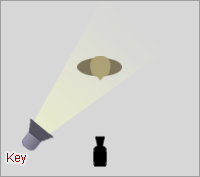
- The Key Light: Key Light

A Key light is the main source of light. It's the strongest and the light that does a lot of influence on the scene and subject. It's placed to the side of the camera so that the face of the subject is well lit up and leaves the other side in shadow. 

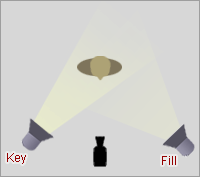
- The Fill Light: Key and Fill

This light comes on second. It removes the shadows from the object - such as on an actor it removes the shadows cast by the faces features e.g: Nose, eyelashes, chin. The light is placed on the opposite side to the key light. The fill light is often less bright and more softer and is placed a little further back and away from the subject to create this effect. 

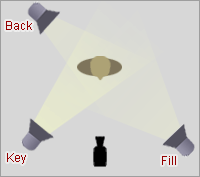
- The Back Light: Key, Fill and Back

The back light is of course placed behind the subject. It's used to give the subject a more 3D look against the background. This gives the subject definition and it moulds around the object/actors outlines to allow you too see how far away the subject is from the background and camera and allows the viewer to separate background from subject.

Here my group made a small tutorial that explains/portrays three point lighting more clearly:


Reflectors

   A Reflector is basically a piece of equipment that reflects light off either the key or back lights and onto the subject; this is often used as a fill light because they do the same job; removes the shadows from the subject that are left behind from the other lights. It can often be used also to simply reflect day light onto the subject; however day light can not always be reliable as the British weather CONSTANTLY changes...

   
  A Reflector like this is used because its simple to use and proves to be rather good. As I said above they are mostly used to remove any remaining shadow that is left in the actor's face or on an object. HOWEVER:
have fun putting it away... it can be a real pain in the neck :)