The last thing my production team and I did was come up with our groups production name. Well now it's the actual film idea - what our thriller will consist of. After coming up with the idea we now had to present the idea to the class and get feedback.
My next few posts will be about location, costume and prop research - along with some extra research about sound editors that I will post in a separate page on the sidebar :)
JARLINC Production's (consisting of myself, C. Hargreaves and D. Springthorpe) gave a film pitch to the class explaining and persuading our film idea in hope to get it commissioned. I will be posting a draft of my film Treatment (story) on a separate page in the side bar of my blog and a filmed version of our pitch further on in my post.
Information on our Film idea "Shadowed"
Target Audience: 12a & Thriller Fans
The name of the thriller film we have decided to produce is "Shadowed". We have decided upon this name because it has multiple meanings behind it which both link to our film idea =
1) Shadows are something that follows you and are near enough everywhere - linking with the fact that our Protagonist feels like he is being shadowed by his best friend killing everyone close to him.
2) The second reason is that the word shadowed is getting at the darker side of our protagonist's personality - linking with our film because our protagonist suffers from Schizophrenia and that it is him killing everyone.
Our film idea opening is based around our protagonist (Connor) running away from the guy called 'The Shadow' (his best friend, Seth) whom appears to the audience to be wanting to kill him. Connor runs to the shelter of his work place - science labs - pulls out a gun and plans to defend himself. Near the end of our 2 minute clip we are planning to get Seth detach himself from the shadows of the corridor and appear behind Connor. We then cut to black screen and a gunshot to keep the suspense and cliff hanger of the foreshadow.
Using many different Camera shots, movements and special effects for the lightning and thunder we hope to bring a sense of mild horror, jump scares and thrill into our film. We hope to use sound effects for the noise of a heart beating, thunder and running footsteps (if our own steps don't work) to involve and bring in the audience.
SOUND, LIGHTNING, SETTING AND PROPS
- Thunder = recordings from internet
- Lightning = strobe lights / proper lights flicking / filters / editing (depending on health and safety risks)
- Darkness = editing on computer
- Work place = Schools science block
- Work grounds = Field / red gra
- Footsteps = recordings from internet / actual actors footsteps
- Science lab room = S4 classroom
- Guns = provided by C. Hargreaves
- Costumes = provided by actors or ourselves
Feedback from 'Commissioners' (The class and Sir)
The feedback we got was relatively good; but we never actually got many 'if you do this it will be better' advice apart from one piece of feedback we got from Mr Hood. He brought up our ideas for our lightning effect in our film; we originally thought about using a strobe light for the flash effects - however Sir gave us the advice to perhaps find a different way around it as strobe lighting can potentially become a health and safety risk.
There wasn't much else to comment on as most was covered in our pitch. If I receive anymore feedback however I will straight away post it on here for you to read.
Before we can completely decide upon a Target Audience for our Thriller Film Opening, we had to do some research to find what sort of people will watch our film and what age ratings there are out there.
Target Audience Research
Classification:
The classification or age rating of a film is something that all filmmakers must consider when creating a film - in which case, so do we. The age rating depends initially on what the film consists of e.g: sexual content, violence or simply the number of times particular swears words are spoken in the film - and the list goes on. All of this is needed to be analysed and considered so that the correct age rating is applied to the film. The rating is decided upon the British Board Of Film Classification (BBFC).
The BBFC:
This is an association of people who chose the ratings of films that are made in Britain - no matter the genre. Each age rating has its own criteria of what the films need to contain so it can appropriately fit into the classification. Here is the list of age ratings: and there's a lot...
- The U stands for UNIVERSAL.
-Films are appropriate for those of 4+ or in some cases, younger.
- Characters in the film have only suitable hints of kissing and sexual behaviour is minimal.
- Drug use of anything illegal are not shown in films classified as a U
- Suttle language such as "Bugger" or "Hell" can be used but no swearing.
- The PG stands for PARENTAL GUIDANCE.
- Films are appropriate for a young audience - although certain scenes may not be appropriate for younger children.
- Mild swearing such as B***h is used; except it must be used suitably
- Sexual References may be used but not to the extreme or in full
- Drugs are not focused upon except for anti-drug films on education message; however drugs are spoken of and shown
- Drinking and smoking aren't encouraged in a PG rated film
- Violence is shown but not in great detail
- Sexual violence is not shown in detail but may be implied towards (the idea must be justified)
- Behaviour that is dangerous is shown but not focused on
- Drugs are displayed on screen but not continuously
- Sex is briefly shown though it must be discreet
- Comedy can consist of crude comments & used to lesson impact of sexual content. Subtle nudity allowed.
- Aggressive racist or homicidal comments/language is still not accepted - would need to be a higher age rating.
- Bad language is allowed like the F-word but not frequently. Same as in PG B***h can be used along with other subtle words
- A 12A rating follows the same rules as a 12 age rating - only this is the age rating used for cinemas.
- The A stands for "Accompanied" which implies that those who are younger than 12 must be accompanied with an adult to be able to watch the film.
- An age rating of 15 is literally suitable for those of 15+ and is often consisting of stronger stuff than a 12A age rating.
- Racist or homicidal language or behaviour is allowed in these films
- Drug taking being portrayed on camera is allowed
- Brief scenes of sexual violence or verbal referencing to sexual violence is accepted
- Strong violence is permitted
- Strong language is beginning to be frequently used
- Sexual nudity is allowed
- As an adult under the eyes of the law, the 18 classification has a lot more leeway
- Strong language is pushed to the extreme
- drugs and shown & used but again not promoted
- Extreme racist and homophobic language/behaviour is allowed
- strong scenes of horror / blood and gore
- Sexual activity and violence is heavy
- F word and C word are often heard throughout the films - especially gangster ones
- These films are only shown in specially licensed cinemas
- They are a specialist category, legally restricted classification for explicit materials.
Jarlinc's Identified Target Audience
At the end of all the research we have decided to rate our film 15. This is simply because there is certain scenes that hint on violence or homicidal behaviour or scenes that may not be suitable for children under the age of 12 unless accompanied by an adult of 18+.
This is out idea of what our typical target audience would be like for our thriller:
This is Neil Evans. He's a 16 year old male who has just started sixth form at Great Wyrley High School, in Great Wyrley. Currently he is studying AS Media, AS Music, AS Physics and AS English - all areas that he is thoroughly interested in because he is able to express his imagination. He's a bright kid and has his future mapped out - hoping to go to University and further study Media and Music.
At the moment Neil lives with his parents; as most 16 year old kids do. Whenever he isn't studying, Neil enjoys high tense sports like rugby and also enjoys a quiet read of his favourite books like "Murdoch Mysteries" or "Percy Jackson", even "Goosebumps" every now and again. He also likes going to the cinema with his friends and brother to watch pretty much any genre, though his personal favourites are: Horror, Thriller, Action, Mystery and Sci-Fi. Two recent films he went to watch are Van Helsing and Taken. He also liked the old fashioned thriller types as well, but can't pick his favourite one.
Neil has a small saturday part time job from which the money he earns he saves up each year to go to the Cinema or to buy new books or DVDs. He also has a college fund and car fund in his bank - he hopes to buy a nice jet black car but isn't sure which type to get - although Bentleys and Jaguars rather catch his eye.
Music preferences that Neil has is anything that has a good beat or a loud boom that can drown everything out while he reads. The albums he has are such things as Queen, Black Sabbath, Nickelback, Panic at the Disco and loads more from the rock, alternative rock and pop areas of the music culture.
A sound editor is a member of a film production team who abilities lie strongly in the audio of a film. A film has three main categories of audio: Dialogue, music and effects. The sound editors who specialize in each of these categories are those of high skill and experience in the techniques; therefore improving the quality of the audio and the film due to the fact that each member of the production team has their own small part to do - which vastly improves the production speed.
Also a sound editor may work in another area of Media - such as video games or radio stations. Each of these are slightly different but they pretty much do the same thing which is the editing of sounds. Below are a more detailed research on each of the three categorises I spoke of earlier in my post:
Dialogue = The dialogue in Media, or in anything, is the fancy technical term for the speech of characters. These conversations and bits of spoken sound can be trimmed and cut down to size by the sound editor, volume pitch altered to match the soundtrack behind it - preventing any loud parts of the backing music to go over a character speaking or something like that. The dialogue is pretty easy, after all its the actors/actresses that do the talking but its down to the editor to make sure the dialogue is fitted perfectly into the sound of the films and sound files.
Music = The music side of the audio takes time and effort to get right - and takes a skilled person to get it perfect, as it is the hardest part to edit. The transitions between tracks when the screen footage chances is rather hard to match up perfectly - when this is done wrong it can cause the sound to appear jumpy and not one smooth sound. Also the timings of when the music changes, quietens or gets louder must be right else it could create a tiny continuity error = such as a when a serious scene is happening the music should either stop or turn to something more dramatic - you aren't going to have something like The Safety Dance playing in the background - because it would tip the whole mood and even a few seconds of it going over the scene can ruin the effect.The matching up is a challenge in itself but when done - it sounds pretty effective.
Effects = The added effects such as explosions, footsteps etc are one of the basic sounds to edit and match up in the sound tracks. Same applies to the effects as to the music, they must fit in and be placed in the correct place! You couldn't have an gun shot going off before the gun shoots and then the gun trigger is pulled, bullet comes out after the sound - it wouldn't work. The only time something like an off screen sound or a sound in the distance without seeing what made it is acceptable is things like thunder storms, the weather, distant explosions etc. This is because light travels faster than sound; meaning the audio will be heard after the visual effect - this being something an effect editor should put under consideration - theres a chance it could go wrong.
A time before sound was in films:
As everybody - or most people - will know; films didn't always have sound. The same as they didn't have colour. Any film before 1930 ish was pretty much in complete silence - therefore sound editors were not needed, so never existed. They were thought of as a scientific revolution, but the invention of sound and colour television was thought almost unbelievable.
Charlie Chaplin was one of the most famous of the early 20th century filmmakers. Nearly all his films were silent. Cameras were huge machinery - so obviously heavy - meaning as soon as recording started, the camera was not moved.
Of course, when sound became invented - the sound editor was born into existence. As the filming industry grew and become popular, so did the sound editor numbers. They were used in the production of patriotic films such as advertisements - one example would be `Join your country's army!`. They became the main element of a production team and vital in the filmmaking crew.
Production companies weren't around either in the days of Charlie Chaplin. Films instead were presented under a certain name - like Charlie Chaplin.
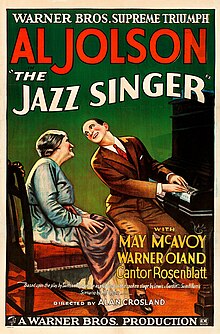
This changed in 1927 when Warner Brothers produced a film called The Jazz Singer which was released with diegetic music and syncronised dialogue. Ever since this film, the progression of sound in films developed immensely. The sounds were recorded and altered to create certain types of atmospheres and moods for the films and scenes. If these sounds are done incorrectly it could have deverstating effects on the film.
Foley and Dubbing
Foley in media is basically the reproduction of everyday sound effects that are added into videos, films and any other mediums in a post production to enhance audio quality. The foley sounds are often used to reproduce sounds like swishing of clothing, footsteps, heart beat or doors squeaky hinges and glass breaking.
Foley is best when it is integrated so well into a film that the audience hardly notices it's non-diegetic. They are used to make a sense of reality in a scene. If these background noises are not in it - the movie becomes unnaturally quiet and uncomfortable
A Foley artist recreates the realistic ambient sounds that the film portrays. Foley sounds are used to enhance auditory experience of a movie, and can be used to cover up any unwanted sounds that were captured on a set while the film was being filmed - sounds like airplanes and traffic are good for this.
Dubbing is the process when a sound is removed and replaced with an edited sound that's been manipulated and made to perfection through editing. This is often used in films like musicals; on screen sounds are dubbed and replaced with studio recordings and edited versions.
Class example of foley sounds
In groups we took it in turns to attempt to create certain sounds from different types of equipment - things like: flour in a box, a pink scrunch, rolled up newspaper and many other little trinkets. We used these to try and make snow, a cat purring and a punch.
Cat Purring - was created without using the equipment given. For this we used one of the people in our group to use their mouth and tongue to create the purring effect.
Punch - we used the rolled up newspaper and hit somebody (gently) on the arm to make a soft thump sound that represented a punch sound.
Walking in snow - we used the flour in a box and the scrunchie. By placing the scrunchie into the flour and squashing it with our hands or a stick allowed a crunching sound to occur.
Here are the Foley sounds that we created:
Role of a Film Composer in Media:
The role of a film composer is to create music that is either non-diegetic (placed over parts of the film) or diegetic (played in the film). The idea of their job us to test out these pieces of music and create pieces that help to lure the audience into the film and give the film it's own spark of life. A composed piece of music when done correctly can have amazing effects on the film and even boost it's popularity.
An example of a famous composer would be award-winning John Williams who's been the sole creator of such outstanding pieces of music like Harry Potters Hedwig's theme and Indiana Jones "The Raiders March". He also did the 1984 Olympic music. John Williams aimed to make the music of Indiana Jones be recognizable for the Jones character. He once said "The Music has to lure us in so it seems like it is going to be a beautiful experience and then turn itself around into something much more terrifying" John has won 90+ awards for his compositions that were playing in a lot of the most memorable films going.
His music isn't forgotten to this day: here's a list of a few of the films he composed music for:
- Star Wars "The Death March"
- Indiana Jones "The Raider's March"
- Harry Potter "Hedwig's theme"
- ET - Super man
- Jaws (Embedded example below)
- Jurassic Park (Embedded example below)
Personal favourite sound moment:
One of my personal favourite sound moments in films. in all fairness, must be from the Jaws theme song which was composed by John William. The particular sound I particularly like is the loud, deep booming noises that begin the piece of music. The way the instrument sounds are spaced out to start with and get faster to be incorporated with the banging of drums brings in the idea of terror and the approaching, lethal danger; the shark. The sound gets you instantly in the edge of your seat and gets you gripped into the music - well... it does that for me anyway :)
To have a listen just click on the video above called "John William: Theme from Jaws (Boston Pops)"
The Wilhelm Scream
The Wilhelm Scream is a particular sound called a "stock sound". It currently began to be used in 1951 and was often used in moments of violence; stabbings, gunshots, pushed off stuff - you get the idea. Now it has been used in way over 200 films - most of them VERY famous, for example Star Wars and Indiana Jones are star pupils for having the Wilhelm Scream tucked somewhere into their film.
Now-a-days the Wilhelm Scream is used to depict a sense of humour in something but it is also mainly used for the same reasons as before; violence.
The video below portrays how much the Wilhelm Scream is used - sometimes it can be used more than twice in the same film!
After our class discussion on different genres and the decision on our Media Coursework genre to be Thriller, and our film research on film titles - we're now onto thinking up a film idea that will help us to create our film.
As a production team (Myself, Cameron H & Daniel S) we needed to create a story line that our film will be based around/on.It had to include one Protagonist and one Antagonist at least and incorporating the thriller conventions. We came up with a few possible ideas but found that they were either consisting of too much violence (e.g: the idea where our protagonist or Antagonist fight or the on scene gunshot/death) or that the story line was far too confusing or not as interesting as a thriller should be.
The plot we finally settled on we decided to call Shadowed. It consists of a young scientist named Connor running away from something that you don't see until a little while into the film. The something is a guy called Seth; of which we decided to dress completely in black to represent a shadow figure (hence the name). The idea of the film is that Seth is hunting Connor and that Connor resorts to arming himself for protection. At the end there is confrontation and a gunshot; which you don't know who shoots. However, Seth is actually Connor's 'dark' side: meaning that our Protagonist is schizophrenic and Seth is only in Connor's mind.
We decided upon the name Connor because it's the middle name of one of the people in my group, which relates the film idea to us. The name Seth originated from the fact that the name is often used for dark and sinister characters.
Pros of our film idea
- Our film only requires two actors to participate.
- Camera work + editing will be effective and not out of this world extreme lengths.
- There is not a time problem; the idea is set in present day
- Costume problems are easy enough; they are simple everyday clothes and the location/setting is suitable.
Cons of our film ideas
- We may have to film at night for the best effect
- Lightning flashes could go against health and safety conditions
Alright so now the genre of our film and our studio names have been decided upon we are now taking into consideration a basic idea of what we could do in the evaluation questions:
Here are the evaluation questions we will be having to consider:
1) In way way does your media product use, develop or challenge forms and conventions of real media products?
2) How does your media product represent particular social groups?
3) What kind of media institution might distribute your media product and why?
4) Who would be the audience for your media product?
5) How did you attract/address your audience?
6) What have you learnt about technologies from the process of constructing this product?
7) Looking back at your preliminary task, what do you feel you have learnt in the progression from it to the full product?
These questions have been discussed among our production teams and we came up we a way to answer the questions:
1) Our film idea challenges the normal "one person a good guy - one person a bad guy" convention of a thriller. We are subverting this by making the appearing good guy (the Protagonist) the hidden killer through the aspect of schizophrenia. The Antagonist is merely a shadow created by the Protagonist's imagination.
We also use the conventions of the colour black in our film; the ideas that black is evil, dangerous, unknown and something to be afraid of all links in with what our Antagonist should give off - we want people to think he kills the Protagonist in the end.
2) At the end of the film is challenges social groups in the aspect of Seth (Antagonist) being dressed all in black, hoodie etc, basically the stereotypical look of a killer and Connor (Protagonist) being the smart, more formal scientist guy who appears weak and the victim, their roles are switched around at the end - Connor becomes the killer and Seth simply isn't even there.
3) At this point this question isn't something to worry about - we need to complete the film opening before we begin to decide what media institution is likely to distribute our film.
4) So far we have decided that our audience to be thriller fans of 15+ due to the content of our film idea.
5) The content of our film will attract the desired audience by the jump scares, growing suspense and tension that builds throughout the film. We also think that perhaps a male audience would prefer our film to females.
6) Currently we have learnt/learning about the basic camera equipment & the editing software that we will be using to film and edit our film in - (Final Cut & Soundtrack Pro). Later we shall be learning about more technology that will be needed to produce our final film.
7) Observing our preliminary task, myself and my group have decided that, after learning about a lot more technical shot types and filming equipment, along with learning how to use the advanced filming techniques - we should be able to show a vast amount of improvement in our skills in our film opening.
For some time now, our class has been touching on production company names and idents and have been trying to think up names and ident designs for our own production companies.
Myself and my group (Cameron H and Daniel S) have decided upon the name Jarlinc. The idea behind this is because it is all of our middle names joined together. The only letter we inserted to make it more of a word was the letter "I".
J = Dan's Middle name
A = My middle name
R = My middle name
L = My middle name
I
N = Cam's middle name
C = Cam's middle name
We have also been discussing ideas for out production ident. So far our favourite is a jar wrapped in chains and a lock - and as the lock breaks open, a dragon flies from the jar and burns the name Jarlinc onto the glass. = Of course depending on what the programs allow us to do at school will determine how much of this idea we will be able to do. :)
The film ident we have decided upon reflects the values of my production team because the dragon symbolizes how the three of us like medieval legends and how I'm fascinated by mythological beasts. It also goes with the fact we wanted our film production name to be really unique - something made up but `personal` to us; hence it being made up of all the first letters of our names.
The colours of our logo we haven't yet decided upon; we are planning however on the more down-to-earth colours like golds, silvers etc instead of bright yellows and pinks for example, because we think those colours seem to work better with the name, the idea and our film in general.